
Content Optimization: A Complete Guide to Improve Your Website SEO
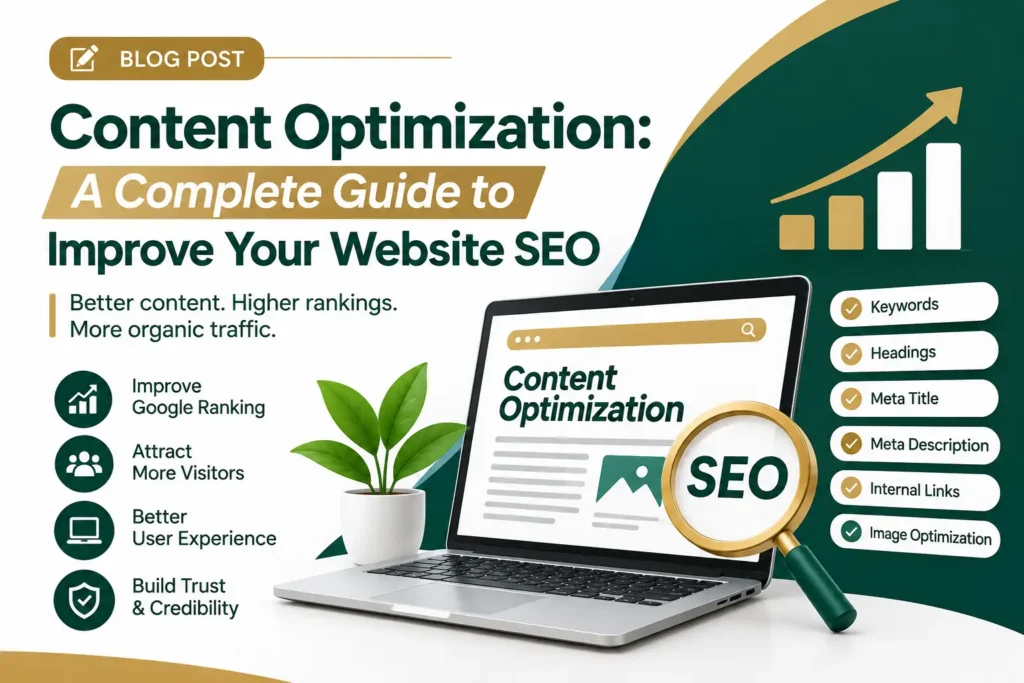
Content optimization is one of the most important parts of Search Engine Optimization (SEO). It helps websites improve their visibility on search engines like Google and attract more visitors.
Creating content alone is not enough. We need to optimize the content using relevant keywords, proper headings, images, internal links, and useful information. Good content optimization helps search engines understand the website and provides a better experience for users.
In this guide, we’ll walk through what to look for, where to find top talent, and how to make sure you’re hiring the right fit for your project.
What is Content Optimization?
Content optimization is the process of improving website content to make it more useful, relevant, and SEO-friendly.
It includes optimizing titles, headings, keywords, images, URLs, and meta descriptions. The main goal is to improve search engine rankings and increase organic traffic.
Importance of Content Optimization
Content optimization plays an important role in digital marketing.
Improves Google Ranking: Optimized content helps search engines understand your website.
Increases Organic Traffic: SEO-friendly content attracts visitors without paid advertising.
Better User Experience: Well-organized content makes information easy to understand.
Builds Trust: Useful and informative content creates credibility.
Increases Engagement: Relevant content encourages visitors to explore your website.
Important Techniques for Content Optimization
1. Keyword Research
Keyword research is the process of finding the words people search for on Google. Tools like Google Keyword Planner and Google Trends help identify relevant keywords.
Use the main keyword naturally throughout the content.
2. Optimize Meta Title
A meta title is the title displayed on Google search results. It should be attractive, relevant, and include the focus keyword.
Example: Content Optimization Guide – Improve Your Website SEO
3. Write an SEO-Friendly Meta Description
A meta description briefly explains the content of a webpage. It encourages users to click on your website from search results.
Example: Learn content optimization techniques to improve website SEO, increase organic traffic, and achieve better Google rankings.
4. Use Proper Headings
Use H1 for the main title, H2 for major sections, and H3 for subheadings. Proper heading structure makes content easier to read.
5. Optimize Images
Images improve the visual appearance of a blog post. Use relevant images and compress them to reduce file size.
Add descriptive image names and ALT text to help search engines understand the images.
6. Add Internal and External Links
Internal links connect different pages within the same website. External links connect your content to useful websites.
Both help users discover additional information.
7. Create High-Quality Content
Always create original, informative, and user-friendly content. Avoid keyword stuffing and duplicate content.
Tools for Content Optimization
Some useful SEO tools include:
Google Search Console
Google Keyword Planner
Google Analytics
Rank Math SEO
Yoast SEO
Google Trends
These tools help analyze keywords, website performance, and SEO issues.
Conclusion
Content optimization is essential for improving website performance and search engine visibility. By using proper keywords, attractive titles, optimized images, internal links, and high-quality content, businesses can improve their SEO results.
A well-optimized blog post not only helps websites rank better on Google but also provides valuable information to visitors.
Start optimizing your website content today to improve your online presence and attract more organic traffic.